
Choosing the right food for your dog or cat can feel overwhelming with thousands of brands competing for your attention. The good news? Veterinarians have clear favorites in 2026, and they’re backed by research, clinical testing, and real-world results. This comprehensive guide breaks down the Top Vet-Recommended Pet Foods for 2026: Complete Reviews and Feeding Guides, helping you make informed decisions about what goes into your pet’s bowl.
The brands topping veterinary recommendation lists this year—including Hill’s Pet Nutrition, Royal Canin, Purina Pro Plan, IAMS, and emerging players like Tiki Pets—offer more than marketing promises. They deliver science-backed nutrition with transparent ingredient lists and specialized formulas for every life stage and health condition. Whether you’re feeding a puppy, managing a senior cat’s kidney health, or addressing food sensitivities, this guide provides straightforward guidance to match your pet with their ideal diet.
Key Takeaways
- Hill’s, Royal Canin, and Purina Pro Plan remain the three most recommended brands by veterinarians in 2026, valued for extensive research and specialized formulas[2][3][6]
- Royal Canin offers 160+ targeted formulations, the largest variety among top brands, including breed-specific and condition-specific diets[3]
- High-protein, fresh food options are gaining popularity, with brands like Tiki Pets (43% protein) and JustFoodForDogs leading the fresh food movement[1][4]
- Transitioning to new food requires 7-10 days of gradual mixing to prevent digestive upset and ensure acceptance
- Specialized diets address specific needs from sensitive stomachs to weight management, with vet-approved options for every health concern
Understanding Why Veterinarians Recommend Specific Brands
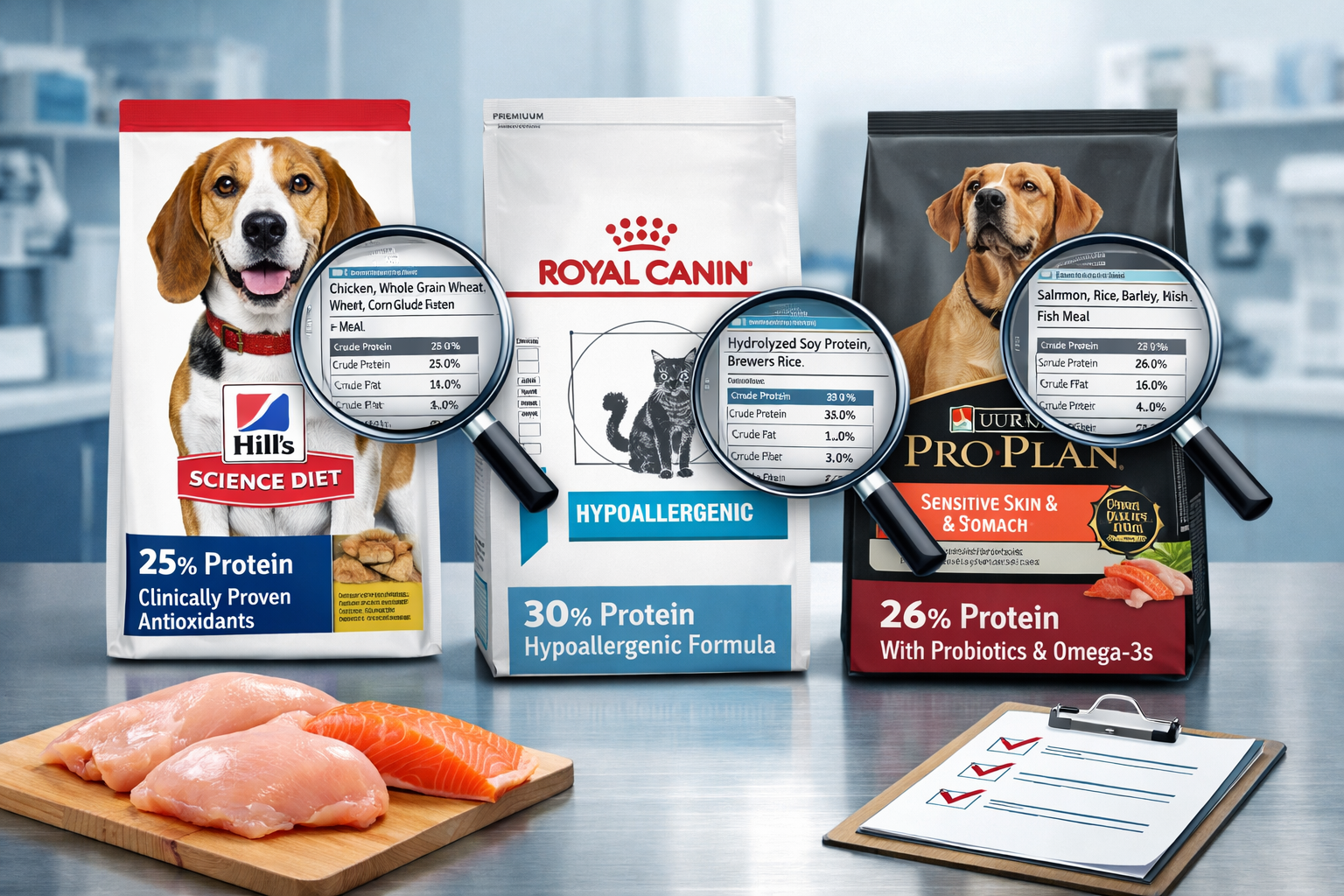
Veterinarians don’t recommend pet foods based on guesswork. Their top picks in 2026 share common characteristics that set them apart from grocery store alternatives.
Research-Backed Formulations
The leading vet-recommended brands invest millions in nutritional research and feeding trials. Hill’s Pet Nutrition, Royal Canin, and Purina Pro Plan all maintain dedicated research facilities where veterinary nutritionists develop and test formulas before they reach store shelves[3][6]. This scientific approach ensures each recipe meets AAFCO (Association of American Feed Control Officials) standards and provides complete, balanced nutrition.
Quality Control and Consistency
Premium brands maintain strict quality control throughout manufacturing. They source ingredients from verified suppliers, conduct regular testing for contaminants, and ensure every batch meets nutritional specifications. This consistency matters when your pet relies on the same food daily for optimal health.
Specialized Nutrition Options
Modern pets face diverse health challenges, from food allergies to chronic kidney disease. The Top Vet-Recommended Pet Foods for 2026: Complete Reviews and Feeding Guides highlight brands offering targeted solutions. Royal Canin leads with over 160 different formulations addressing specific breeds, life stages, and medical conditions[3]. Hill’s Science Diet provides 70+ diet types for targeted health support[3].
For pet owners seeking comprehensive information about different food types, our complete dog food reviews section offers detailed analysis across multiple brands and categories.
Top Vet-Recommended Dog Food Brands for 2026
Hill’s Science Diet: The Balanced Specialist
Hill’s Science Diet positions itself as the middle-ground specialist, offering scientifically formulated nutrition without overwhelming complexity. The brand provides over 70 different formulations targeting specific health concerns[3].
Key Products:
- Hill’s Science Diet Puppy: Features antioxidants for immune support and DHA for brain development[2]
- Hill’s Prescription Diet k/d: Kidney care formula for dogs with renal issues
- Hill’s Science Diet Adult Sensitive Stomach: Includes prebiotic fiber for digestive health
Nutritional Highlights:
- Real meat as first ingredient
- No artificial colors or preservatives
- Clinically proven antioxidants
- Veterinary nutritionist-formulated recipes
Price Range: Mid-to-premium ($2.50-$4.00 per pound)
Royal Canin: The Customization Leader
Royal Canin takes specialization to the next level with breed-specific formulas and the largest variety of condition-specific diets available in 2026[3]. This French brand (owned by Mars Petcare) focuses on precise nutritional profiles matched to specific needs.
Key Products:
- Royal Canin Breed Health Nutrition: Tailored formulas for 70+ specific breeds
- Royal Canin Veterinary Diet Urinary SO: Supports urinary health and prevents crystal formation
- Royal Canin Puppy: Breed-specific puppy formulas with targeted kibble sizes
Nutritional Highlights:
- Over 160 different formulations[3]
- Breed-specific kibble shapes and sizes
- Targeted protein, fat, and mineral ratios
- Extensive veterinary diet options
Price Range: Premium ($3.00-$5.00 per pound)
For owners of specific breeds requiring tailored nutrition, our breed-specific diets guide provides detailed feeding recommendations.
Purina Pro Plan: The Research Powerhouse
Purina Pro Plan combines affordability with veterinary-developed nutrition, making it accessible to more pet owners while maintaining quality standards. The brand emphasizes probiotics for digestive health and lean muscle building across formulas[2][4].
Key Products:
- Purina Pro Plan Puppy: Features DHA for brain development and antioxidants for immune support[2]
- Purina Pro Plan Sensitive Skin & Stomach: Contains oatmeal for digestibility and omega fatty acids
- Purina Pro Plan Sport: High-protein formula (30%) for active dogs
Nutritional Highlights:
- Live probiotics in every formula
- Real meat, poultry, or fish as #1 ingredient
- Fortified with guaranteed live probiotics
- Omega-6 fatty acids for skin and coat
Price Range: Mid-range ($1.80-$3.50 per pound)
IAMS: The Accessible Premium Option
IAMS provides veterinary-quality nutrition at price points accessible to budget-conscious pet owners. The brand focuses on digestive health, immune support, and high-quality protein sources.
Key Products:
- IAMS ProActive Health: Complete nutrition for all life stages
- IAMS Sensitive Naturals: Limited ingredient formulas for food sensitivities
- IAMS Healthy Weight: Portion-controlled nutrition for weight management
Nutritional Highlights:
- Farm-raised chicken as first ingredient
- Wholesome grains for energy
- Vitamin E for immune support
- Omega fatty acids for healthy skin
Price Range: Budget-friendly premium ($1.50-$2.50 per pound)
Tiki Pets: The High-Protein Innovator
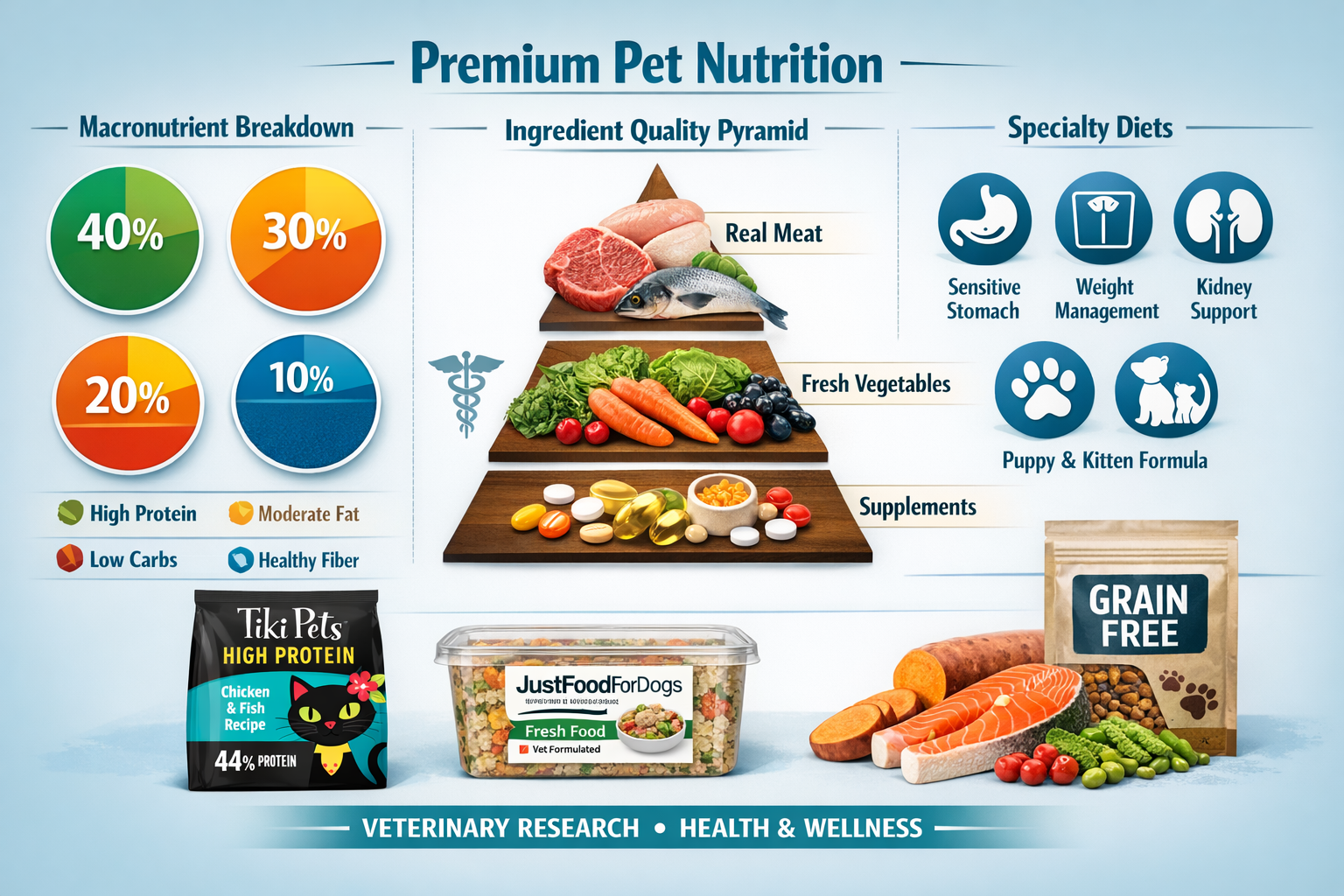
Tiki Pets represents the growing trend toward carnivore-focused, high-protein nutrition in 2026. Their Tiki Cat Born Carnivore formula features 43% protein, emphasizing grain-free carbohydrate sources and meat-forward ingredients[1].
Key Products:
- Tiki Cat Born Carnivore: 43% protein, grain-free formula[1]
- Tiki Dog Aloha Petites: Small-breed focused with real shredded meat
- Tiki Cat After Dark: High-moisture, protein-rich wet food
Nutritional Highlights:
- Exceptionally high protein content (40-43%)
- Grain-free formulations
- Real, recognizable meat ingredients
- Minimal processing approach
Price Range: Premium ($4.00-$6.00 per pound)
Understanding what ingredients like chicken meal bring to dog food helps pet owners evaluate protein quality across different brands.
Top Vet-Recommended Cat Food Brands for 2026
Hill’s Science Diet for Cats
Hill’s extends its research-backed approach to feline nutrition with formulas addressing cats’ unique dietary needs as obligate carnivores.
Key Products:
- Hill’s Science Diet Adult Indoor Cat: Controlled calories for less-active indoor cats
- Hill’s Prescription Diet c/d: Urinary health support
- Hill’s Science Diet Kitten: DHA for brain and eye development
Nutritional Highlights:
- High-quality protein for lean muscle
- Controlled mineral levels for urinary health
- Taurine for heart and eye health
- Omega-6 fatty acids for skin and coat
Royal Canin for Cats
Royal Canin’s feline formulas match their canine counterparts in specialization, offering breed-specific and condition-specific options.
Key Products:
- Royal Canin Feline Health Nutrition: Breed-specific formulas (Persian, Maine Coon, Siamese)
- Royal Canin Urinary SO: Veterinary diet for urinary health
- Royal Canin Kitten: Age-appropriate nutrition with easy-to-chew kibble
Nutritional Highlights:
- Breed-specific kibble shapes
- Precise nutrient profiles for feline needs
- Veterinary diet options for common conditions
- High digestibility formulas
Purina Pro Plan for Cats
Purina Pro Plan’s feline formulas emphasize real meat proteins and probiotics for digestive health, mirroring their canine success.
Key Products:
- Purina Pro Plan LiveClear: Reduces allergens in cat hair and dander
- Purina Pro Plan Sensitive Skin & Stomach: Limited ingredient formula
- Purina Pro Plan Urinary Tract Health: Reduces urinary pH for bladder health
Nutritional Highlights:
- Real chicken, turkey, or salmon as #1 ingredient
- Live probiotics for digestive health
- 25 vitamins and minerals
- Omega-6 fatty acids
Fresh and Minimally Processed Pet Food Options
The fresh food segment represents one of the fastest-growing categories in pet nutrition for 2026. These brands combine convenience with minimal processing and research backing[4].
JustFoodForDogs
JustFoodForDogs offers veterinary-developed fresh food recipes made in USDA kitchens with human-grade ingredients. Each recipe is formulated by board-certified veterinary nutritionists.
Key Features:
- Fresh, refrigerated meals
- Human-grade ingredients
- Veterinary nutritionist-formulated
- Transparent ingredient sourcing
Freshpet
Freshpet provides refrigerated pet food in convenient roll and tray formats, available in major pet retailers nationwide.
Key Features:
- Fresh, never frozen
- Real meat, vegetables, and fruits
- No preservatives or artificial ingredients
- Convenient refrigerated format
Nom Nom
Nom Nom delivers fresh, pre-portioned meals directly to your door, customized to your pet’s specific needs, age, and weight.
Key Features:
- Personalized meal plans
- Fresh ingredients, gently cooked
- Veterinary nutritionist-developed recipes
- Convenient home delivery
Pet owners interested in fresh feeding approaches can explore our raw food guides and raw dog food diet recipes for homemade alternatives.
Complete Feeding Guides: Portion Control and Transition Tips
Understanding Portion Sizes
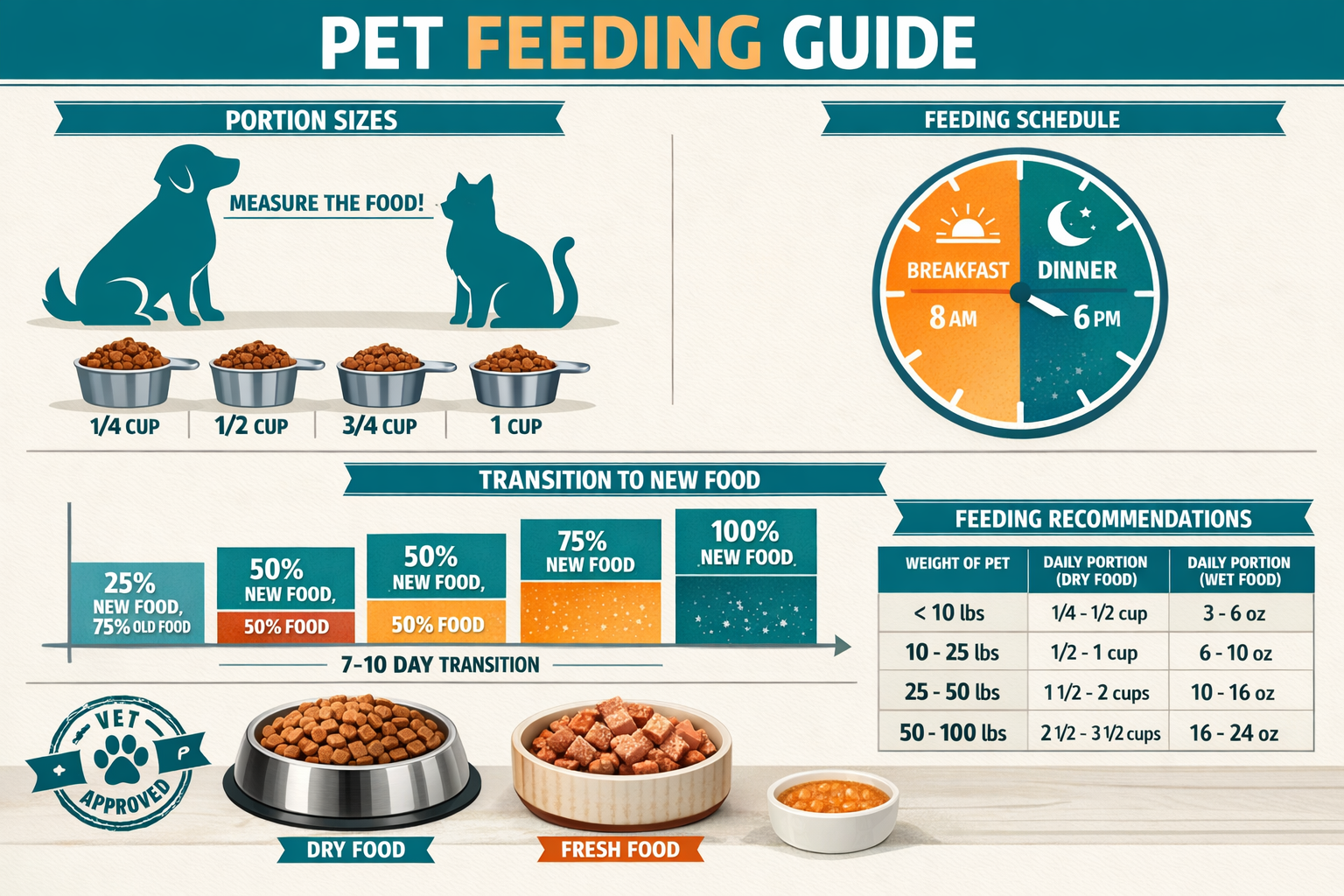
Proper portion control prevents obesity while ensuring adequate nutrition. Most pet food bags provide feeding guidelines based on weight, but individual needs vary based on:
- Activity level: Active dogs need 20-40% more calories than sedentary pets
- Age: Puppies and kittens require more calories per pound than adults
- Metabolism: Some pets naturally burn calories faster
- Health status: Medical conditions may require adjusted portions
General Feeding Guidelines:
| Pet Weight | Daily Dry Food Amount | Daily Wet Food Amount |
|---|---|---|
| 5-10 lbs | 1/2 – 1 cup | 1 – 1.5 cans (5.5 oz) |
| 10-20 lbs | 1 – 1.5 cups | 1.5 – 2.5 cans |
| 20-40 lbs | 1.5 – 2.5 cups | 2.5 – 4 cans |
| 40-60 lbs | 2.5 – 3.5 cups | 4 – 5.5 cans |
| 60-80 lbs | 3.5 – 4.5 cups | 5.5 – 7 cans |
For more specific guidance, our dog food bag size guide helps calculate exact portions based on package sizes.
How to Transition to New Food Safely
Switching pet foods too quickly causes digestive upset, including diarrhea, vomiting, and loss of appetite. The Top Vet-Recommended Pet Foods for 2026: Complete Reviews and Feeding Guides emphasize gradual transitions over 7-10 days.
7-Day Transition Schedule:
Days 1-2: 75% old food + 25% new food Days 3-4: 50% old food + 50% new food Days 5-6: 25% old food + 75% new food Day 7+: 100% new food
Transition Tips:
- Mix foods thoroughly to prevent selective eating
- Monitor stool consistency throughout transition
- Slow the process if digestive issues appear
- Maintain consistent feeding times
- Provide plenty of fresh water
Feeding Schedules by Life Stage
Puppies (8 weeks – 12 months):
- Feed 3-4 times daily until 6 months
- Reduce to 2 times daily after 6 months
- Use puppy-specific formulas until adult size reached
Adult Dogs (1-7 years):
- Feed 2 times daily
- Maintain consistent meal times
- Adjust portions based on activity level
Senior Dogs (7+ years):
- Feed 2 times daily
- Consider senior-specific formulas
- Monitor weight and adjust portions
Kittens (8 weeks – 12 months):
- Feed 3-4 times daily
- Free-feeding acceptable for some kittens
- Transition to adult food at 12 months
Adult Cats (1-7 years):
- Feed 2-3 times daily or free-feed dry food
- Portion control prevents obesity
- Provide fresh water always
Senior Cats (7+ years):
- Feed 2-3 smaller meals daily
- Senior formulas support aging needs
- Monitor kidney function with vet
For breed-specific feeding requirements, check our Doberman feeding guide as an example of tailored nutrition plans.
Specialized Diets for Common Health Conditions
Sensitive Stomach and Food Allergies
Pets with digestive sensitivities benefit from limited ingredient formulas with novel proteins and easily digestible carbohydrates.
Recommended Options:
- Purina Pro Plan Sensitive Skin & Stomach: Features oatmeal for digestibility[1]
- Canidae PURE Goodness: Includes probiotics and fiber for digestive support[1]
- Hill’s Science Diet Sensitive Stomach: Prebiotic fiber supports beneficial bacteria
Key Ingredients to Look For:
- Novel proteins (duck, venison, salmon)
- Limited ingredient lists
- Probiotics for gut health
- Easily digestible carbohydrates (rice, oatmeal)
Our hypoallergenic diet guide provides detailed information about managing food allergies.
Weight Management
Obesity affects over 50% of pets in 2026, making weight management formulas essential for many households.
Recommended Options:
- Royal Canin Weight Care: Precise calorie control with satiety support
- Hill’s Science Diet Perfect Weight: Clinically proven weight loss formula
- IAMS Healthy Weight: Reduced-fat formula with L-carnitine
Weight Management Features:
- Reduced calories (typically 10-20% less)
- Increased fiber for satiety
- L-carnitine for fat metabolism
- Maintained protein for muscle preservation
Kidney Support
Kidney disease commonly affects senior cats and some dog breeds, requiring specialized nutrition.
Recommended Options:
- Hill’s Prescription Diet k/d: Reduced phosphorus and protein
- Royal Canin Renal Support: Controlled mineral content
- Purina Pro Plan Veterinary Diets NF: Kidney function support
Kidney Diet Features:
- Reduced phosphorus levels
- Controlled protein quality and quantity
- Omega-3 fatty acids
- Antioxidant support
Urinary Health
Urinary crystals and stones affect many cats and some dog breeds, requiring pH-controlled diets.
Recommended Options:
- Royal Canin Urinary SO: Dissolves struvite stones[3]
- Hill’s Prescription Diet c/d: Reduces crystal formation
- Purina Pro Plan Urinary Tract Health: Reduces urinary pH
Urinary Health Features:
- Controlled mineral levels (magnesium, calcium, phosphorus)
- pH optimization
- Increased moisture content
- Reduced crystal-forming ingredients
Natural and Premium Alternative Brands
Beyond the big three vet-recommended brands, several natural and premium alternatives earn veterinary approval for quality ingredients and nutritional completeness.
Merrick
Merrick emphasizes real deboned meat as the first ingredient with no artificial preservatives or fillers[1][3].
Key Features:
- Real meat as #1 ingredient
- Grain-free and grain-inclusive options
- Vet nutritionist-formulated recipes
- Made in USA
Nutro
Nutro focuses on non-GMO ingredients and the exclusion of common allergens like corn, wheat, and soy[1].
Key Features:
- Non-GMO ingredients
- No corn, wheat, or soy
- Real meat, poultry, or fish first
- Recognizable ingredients only
Canidae
Canidae offers probiotics and omega fatty acids across formulas, supporting digestive and skin health[1].
Key Features:
- Probiotics in every formula
- Omega-6 and omega-3 fatty acids
- Multiple protein sources
- Grain-free and grain-inclusive options
Taste of the Wild
Taste of the Wild provides nutrient-balanced formulas at accessible price points, featuring 36% protein with grain-free composition[5].
Key Features:
- High protein content (32-36%)
- Novel proteins (buffalo, venison, salmon)
- Grain-free formulas
- Budget-friendly premium option
For detailed reviews of specific brands, explore our analysis of Orijen Tundra and other premium options.
Puppy and Kitten Nutrition: Building Healthy Foundations
The first year of life determines long-term health outcomes, making proper nutrition critical for puppies and kittens.
Top 5 Vet-Recommended Puppy Foods
According to US veterinarians, these five puppy formulas lead recommendations in 2026[2]:
- Hill’s Science Diet Puppy: Antioxidants for immune support, DHA for brain development
- Royal Canin Puppy: Breed-specific options with tailored kibble sizes
- Blue Buffalo Life Protection Puppy: LifeSource Bits with antioxidants
- Purina Pro Plan Puppy: Probiotics for digestive health, DHA for development
- Wellness Puppy: Natural ingredients with DHA and antioxidants
Essential Puppy Nutrition Components
DHA (Docosahexaenoic Acid):
- Supports brain and eye development
- Found in fish oil and eggs
- Critical during first 12 months
Antioxidants:
- Build immune system strength
- Include vitamins E and C
- Support overall health development
Protein for Muscle Development:
- Puppies need 22-32% protein
- Supports rapid growth
- Real meat sources preferred
Calcium and Phosphorus:
- Proper bone development
- Balanced ratios prevent skeletal issues
- Especially important for large breeds
Kitten-Specific Nutrition
Kittens require higher protein and fat than puppies due to their obligate carnivore status.
Key Nutritional Needs:
- Protein: 30-40% minimum
- Fat: 18-25% for energy
- Taurine: Essential amino acid for heart and eyes
- DHA: Brain and vision development
- Calories: 200-250 per day for average kitten
Dry vs. Wet Food: Making the Right Choice
Both dry kibble and wet food offer advantages, and many veterinarians recommend combining both formats.
Dry Food (Kibble) Benefits
✅ Dental Health: Crunchy texture reduces plaque buildup ✅ Convenience: Longer shelf life, easier storage ✅ Cost-Effective: Lower price per serving ✅ Calorie Dense: Easier to meet energy needs for active pets
Best For:
- Active dogs with high energy needs
- Pets without dental issues
- Budget-conscious households
- Free-feeding situations
Browse our dry food reviews for brand-specific analysis.
Wet Food Benefits
✅ Hydration: 75-80% moisture content supports kidney and urinary health ✅ Palatability: More appealing to picky eaters ✅ Digestibility: Easier on sensitive stomachs ✅ Lower Calorie Density: Helps with weight management
Best For:
- Cats (who often don’t drink enough water)
- Senior pets with dental issues
- Pets with kidney disease
- Weight management programs
Understanding how long wet dog food lasts at room temperature ensures food safety.
Combination Feeding Strategy
Many veterinarians recommend mixing dry and wet food to capture benefits of both:
Morning: Wet food (1/2 daily portion) Evening: Dry food (1/2 daily portion)
This approach provides:
- Increased hydration from wet food
- Dental benefits from kibble
- Variety in texture and taste
- Balanced nutrition
Reading Pet Food Labels: What Really Matters
Understanding pet food labels helps evaluate quality beyond marketing claims.
Ingredient List Hierarchy
Ingredients appear in descending order by weight. The first five ingredients make up the majority of the formula.
Quality Indicators:
- Named meat proteins: “Chicken,” “salmon,” “beef” (not “meat meal”)
- Whole ingredients: “Sweet potatoes,” “peas,” “blueberries”
- Specific fats: “Chicken fat,” “salmon oil” (not “animal fat”)
Red Flags:
- Generic terms: “Meat by-products,” “animal digest”
- Artificial preservatives: BHA, BHT, ethoxyquin
- Excessive fillers: Corn gluten meal, wheat middlings
- Artificial colors: No nutritional purpose
Guaranteed Analysis
The guaranteed analysis shows minimum or maximum percentages of key nutrients:
Crude Protein: Minimum percentage of protein Crude Fat: Minimum percentage of fat Crude Fiber: Maximum percentage of fiber Moisture: Maximum water content
Quality Benchmarks:
| Nutrient | Adult Dogs | Puppies | Adult Cats | Kittens |
|---|---|---|---|---|
| Protein | 18-25% | 22-32% | 26-35% | 30-40% |
| Fat | 10-15% | 10-25% | 9-15% | 18-25% |
| Fiber | 2-4% | 2-4% | 2-4% | 2-4% |
AAFCO Statement
Look for the AAFCO (Association of American Feed Control Officials) statement confirming the food provides complete and balanced nutrition:
✅ “Formulated to meet AAFCO standards”: Recipe meets nutritional profiles ✅ “Animal feeding tests using AAFCO procedures”: Actual feeding trials conducted (preferred)
This statement ensures the food provides everything your pet needs without supplementation.
Common Pet Feeding Mistakes to Avoid
Even with quality food, feeding mistakes undermine nutritional goals.
Overfeeding
The Problem: Over 50% of pets are overweight or obese in 2026, leading to diabetes, joint problems, and shortened lifespans.
The Solution:
- Measure portions with standard measuring cups
- Follow feeding guidelines on packaging
- Adjust for treats (reduce meal portions by treat calories)
- Monitor body condition monthly
Free-Feeding Dry Food
The Problem: Constant food availability leads to overeating and makes it difficult to monitor appetite changes.
The Solution:
- Establish set meal times (2-3 times daily)
- Remove uneaten food after 20-30 minutes
- Monitor exact amounts consumed
- Exception: Some cats do well with controlled free-feeding
Inconsistent Feeding Times
The Problem: Irregular meal times disrupt digestion and can cause anxiety or behavioral issues.
The Solution:
- Feed at the same times daily
- Establish routine around family schedule
- Maintain consistency even on weekends
- Use automatic feeders if schedule varies
Ignoring Individual Needs
The Problem: Package guidelines provide starting points, but individual needs vary significantly.
The Solution:
- Monitor body condition score monthly
- Adjust portions based on weight trends
- Consider activity level changes
- Account for treats and table scraps
Sudden Food Changes
The Problem: Abrupt diet changes cause digestive upset, diarrhea, and food refusal.
The Solution:
- Always transition gradually over 7-10 days
- Mix old and new foods in increasing ratios
- Monitor stool consistency throughout
- Slow transition if problems appear
Understanding how long dogs can go without food helps identify when appetite changes require veterinary attention.
Budget-Friendly Vet-Approved Options
Quality nutrition doesn’t always require premium prices. Several vet-approved brands offer excellent value.
IAMS ProActive Health
Price: $1.50-$2.50 per pound Value Proposition: Real chicken, wholesome grains, immune support Best For: Budget-conscious owners seeking veterinary-quality nutrition
Purina Pro Plan
Price: $1.80-$3.50 per pound Value Proposition: Research-backed formulas with probiotics Best For: Families wanting premium features at mid-range prices
Taste of the Wild
Price: $2.00-$3.00 per pound Value Proposition: High protein (36%), grain-free, novel proteins[5] Best For: Owners seeking grain-free options without luxury pricing
Cost-Saving Strategies
💰 Buy Larger Bags: Per-pound cost decreases with bag size 💰 Subscribe and Save: Online retailers offer 5-15% discounts for subscriptions 💰 Watch for Sales: Stock up during promotional periods 💰 Compare Per-Pound Pricing: Don’t be fooled by bag price alone 💰 Consider Store Brands: Some retailers offer vet-formulated house brands
Check reviews like our Valu Pak dog food analysis for budget brand evaluations.
When to Consult Your Veterinarian About Diet
While this guide provides comprehensive information about the Top Vet-Recommended Pet Foods for 2026: Complete Reviews and Feeding Guides, certain situations require professional veterinary guidance.
Medical Conditions Requiring Prescription Diets
🏥 Kidney Disease: Requires reduced phosphorus and controlled protein 🏥 Diabetes: Needs consistent carbohydrate levels and fiber 🏥 Food Allergies: May require hydrolyzed protein formulas 🏥 Bladder Stones: Requires pH-controlled, mineral-adjusted diets 🏥 Liver Disease: Needs modified protein and specific nutrients 🏥 Gastrointestinal Disease: May require highly digestible formulas
Signs Your Pet’s Diet Isn’t Working
⚠️ Persistent digestive issues (diarrhea, vomiting, gas) ⚠️ Skin problems (itching, hot spots, hair loss) ⚠️ Weight loss or gain despite appropriate portions ⚠️ Low energy or lethargy ⚠️ Dull coat or excessive shedding ⚠️ Food refusal or decreased appetite
Life Stage Transitions
Consult your vet when transitioning between:
- Puppy/kitten to adult food
- Adult to senior formulas
- Regular diet to weight management
- Any major dietary change
Conclusion
The Top Vet-Recommended Pet Foods for 2026: Complete Reviews and Feeding Guides reveal clear patterns in veterinary preferences. Hill’s Pet Nutrition, Royal Canin, and Purina Pro Plan continue dominating recommendations due to extensive research, quality control, and specialized formulations addressing every health need[2][3][6]. Emerging brands like Tiki Pets and fresh food companies like JustFoodForDogs represent growing segments focused on high-protein, minimally processed nutrition[1][4].
Choosing the right food requires balancing your pet’s specific needs—age, breed, activity level, and health status—with your budget and feeding preferences. Whether you select a specialized Royal Canin formula, a research-backed Purina Pro Plan option, or a high-protein Tiki Pets diet, the key is consistency, proper portions, and gradual transitions.
Actionable Next Steps
- Evaluate your pet’s current diet using the label-reading guidelines in this article
- Identify your pet’s specific needs based on age, health status, and activity level
- Select 2-3 appropriate foods from the vet-recommended brands discussed
- Consult your veterinarian if your pet has medical conditions or special requirements
- Plan a gradual transition over 7-10 days if changing foods
- Monitor results by tracking weight, energy, coat quality, and stool consistency
- Adjust portions based on individual response and body condition
For ongoing nutrition guidance, explore our nutrition guides section and canine nutrition resources to stay informed about the latest feeding recommendations.
Remember that the best food for your pet is one that meets their nutritional needs, fits your budget, and keeps them healthy and happy for years to come. The vet-recommended brands highlighted in this guide provide excellent starting points for making informed decisions about your pet’s nutrition in 2026.
References
[1] Pet Food Brands – https://www.kwikpets.com/blogs/all-pets/pet-food-brands
[2] Best Puppy Food Brands Recommended By Us Vets – https://westervillepets.com/best-puppy-food-brands-recommended-by-us-vets/
[3] What Is The Best Vet Recommended Dog Food – https://ponderosavetclinic.com/what-is-the-best-vet-recommended-dog-food/
[4] Best Fresh Dog Food – https://www.businessinsider.com/guides/pets/best-fresh-dog-food
[5] Best Dry Dog Foods – https://www.dogfoodadvisor.com/best-dog-foods/best-dry-dog-foods/
[6] Best Dog Food – https://www.petmd.com/dog/vet-verified/best-dog-food
