
}
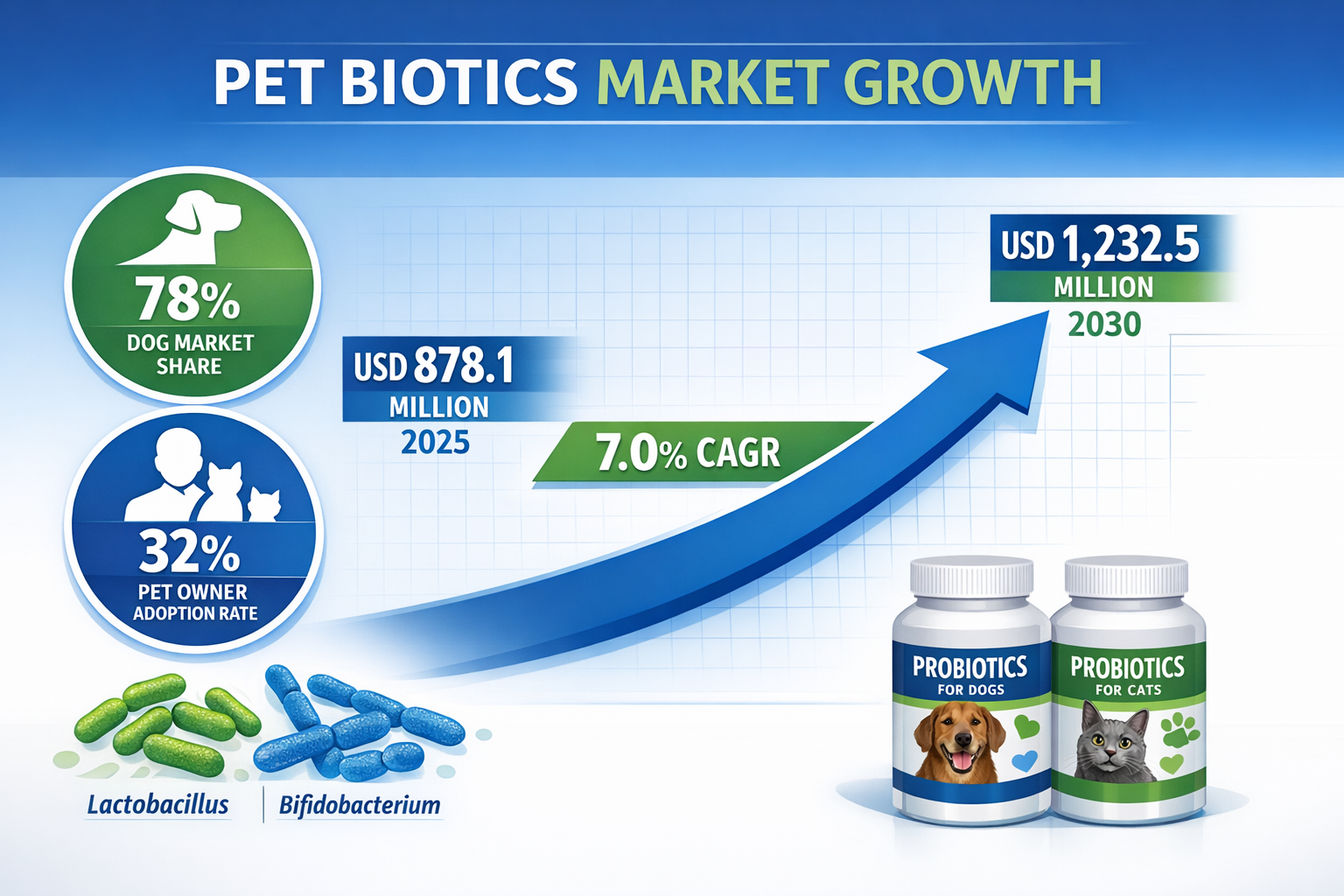
Pet owners in 2026 are witnessing a major shift in how they support their dogs and cats—and it starts in the gut. The Gut Health Revolution: Probiotics and Biotics for Better Pet Digestion in 2026 is transforming pet wellness with cutting-edge supplements that go beyond basic nutrition. Probiotics, prebiotics, digestive enzymes, and synbiotic blends are now proven tools for tackling sensitive stomachs, boosting immunity, and extending the quality years pets share with their families. With the pet biotics market projected to reach USD 1,232.5 million by 2030[1], this isn’t just a trend—it’s a science-backed movement reshaping how pets thrive.
Key Takeaways
✅ Market Explosion: The pet probiotics market will hit USD 1.65 billion by 2030, growing at 8.40% annually, driven by pet humanization and premium wellness trends[2]
✅ Proven Benefits: Probiotics support digestive balance, strengthen gut immunity, and improve overall energy and longevity in dogs and cats[3]
✅ Dogs Lead, Cats Accelerate: Dogs account for 78% of the market, while cats show the fastest growth at 10.4% CAGR as brands solve palatability challenges[2]
✅ Synbiotics Rise: Combined probiotic-prebiotic formulas are growing fastest at 10.5% CAGR, offering holistic gut health solutions[2]
✅ Wide Adoption: 32% of pet owners purchased a supplement in the past year, with probiotics the most recognized for proven health benefits[1]
Why the Gut Health Revolution Matters for Your Pet
The connection between gut health and overall wellness isn’t new for humans—but in 2026, pet parents are applying the same authority-driven insights to their dogs and cats. The digestive system houses 70% of the immune system, making gut health the foundation for everything from energy levels to disease resistance.
The Science Behind Pet Gut Health
Your pet’s gut microbiome is a complex ecosystem of bacteria, fungi, and other microorganisms. When balanced, these microbes:
- Break down food efficiently for nutrient absorption
- Produce vitamins like B12 and K
- Defend against harmful pathogens that cause illness
- Regulate inflammation throughout the body
- Support mental health through the gut-brain axis
When this balance is disrupted—through poor diet, antibiotics, stress, or illness—pets experience digestive upset, weakened immunity, and reduced vitality. That’s where the Gut Health Revolution: Probiotics and Biotics for Better Pet Digestion in 2026 comes in.
Real-World Impact on Pet Longevity
Studies show that pets with balanced gut microbiomes live longer, healthier lives. They experience:
🔹 Fewer digestive issues like diarrhea, constipation, and gas
🔹 Stronger immune response to infections and allergens
🔹 Better nutrient absorption from their regular diet
🔹 Improved skin and coat health from internal wellness
🔹 Higher energy levels and improved mood
Understanding how long it takes a dog to digest food helps pet owners recognize when digestive support is needed.
Understanding Probiotics, Prebiotics, and Biotics: A Breakdown
The biotics category includes several types of supplements, each with distinct roles in supporting pet digestion. Here’s a user-focused breakdown of what each one does.
Probiotics: The Live Beneficial Bacteria
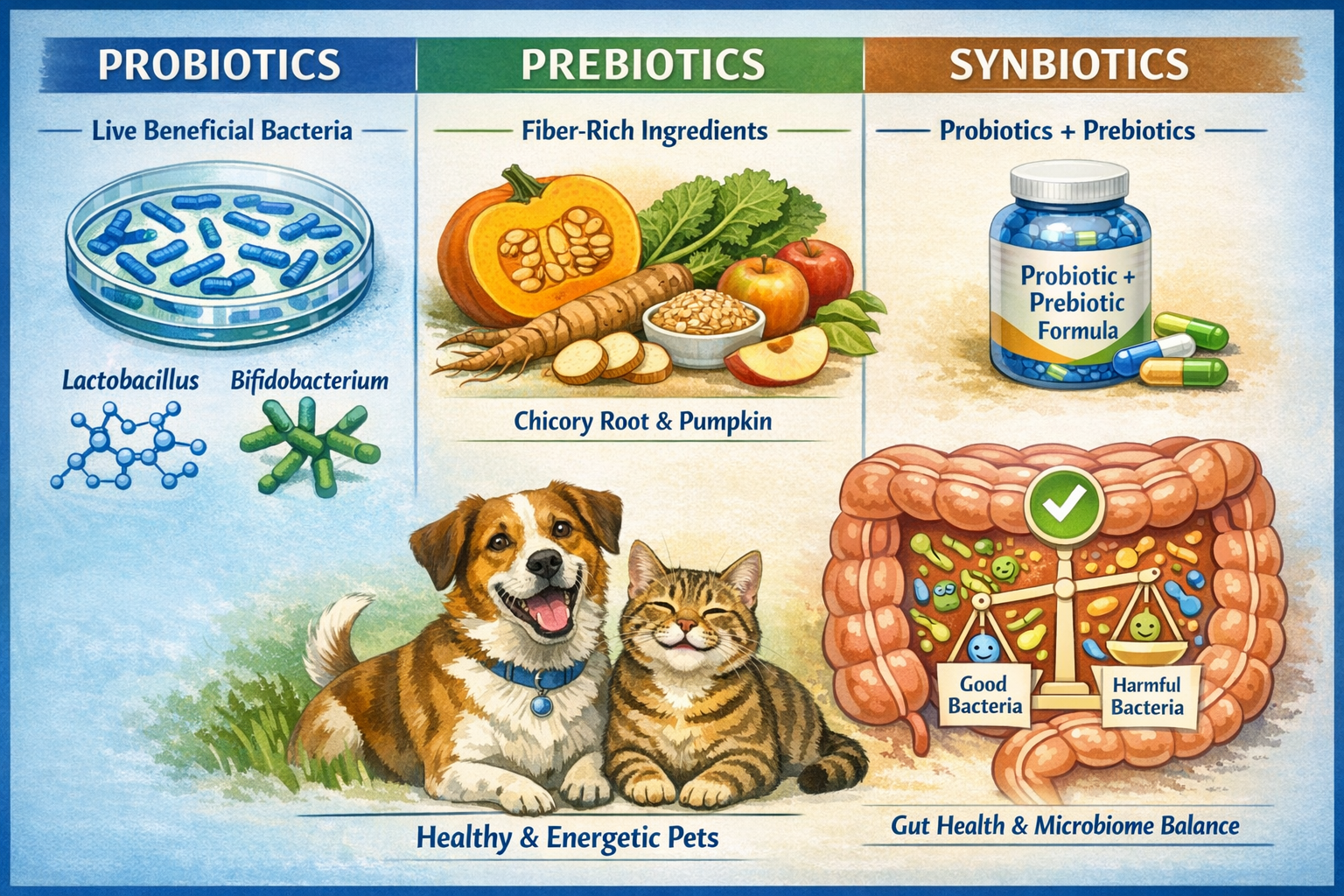
Probiotics are live microorganisms that colonize your pet’s gut and restore healthy bacterial balance.
Most Common Strains for Pets:
- Lactobacillus acidophilus: Supports digestion and nutrient absorption
- Lactobacillus casei: Reduces diarrhea and supports immune function
- Bifidobacterium animalis: Improves stool quality and gut barrier health
- Enterococcus faecium: Helps manage antibiotic-related digestive upset
These strains account for approximately 70% of pet probiotic sales[2], backed by extensive clinical research and regulatory acceptance.
When to Use Probiotics:
✔️ After antibiotic treatment
✔️ During dietary transitions
✔️ For chronic digestive issues
✔️ To support senior pets
✔️ During stressful events (travel, boarding)
Prebiotics: The Fuel for Good Bacteria
Prebiotics are non-digestible fibers that feed beneficial gut bacteria, helping them multiply and thrive.
Common Prebiotic Ingredients:
- Inulin (from chicory root)
- Fructooligosaccharides (FOS)
- Pumpkin fiber
- Sweet potato
- Oat bran
Prebiotics work behind the scenes, creating an environment where probiotics can flourish. They’re often included in high-quality pet foods and supplements.
Postbiotics: The Metabolic Byproducts
Postbiotics are the beneficial compounds produced when probiotics digest prebiotics. These include:
- Short-chain fatty acids (SCFAs) that reduce inflammation
- Enzymes that aid digestion
- Vitamins like B-complex and K
- Antimicrobial peptides that fight harmful bacteria
Postbiotics are gaining attention in 2026 as researchers recognize their direct health benefits.
Synbiotics: The Complete Package
Synbiotics combine probiotics and prebiotics in one formula, creating a synergistic effect. These blends are logging the fastest sales acceleration at 10.5% CAGR[2] as pet owners seek premium, holistic solutions.
Why Synbiotics Work Better:
- Prebiotics ensure probiotics survive and thrive
- Combined action provides faster, more noticeable results
- Simplifies supplementation (one product instead of two)
For pets with sensitive stomachs or those recovering from illness, synbiotics offer comprehensive support.
The Explosive Growth of the Pet Biotics Market in 2026
The numbers tell a compelling story about the Gut Health Revolution: Probiotics and Biotics for Better Pet Digestion in 2026.
Market Size and Projections
| Year | Market Value | Growth Rate (CAGR) |
|---|---|---|
| 2025 | USD 878.1 million[1] | — |
| 2025 (probiotics only) | USD 1.10 billion[2] | — |
| 2030 | USD 1,232.5 million[1] | 7.0% |
| 2030 (probiotics only) | USD 1.65 billion[2] | 8.40% |
| 2033 | USD 5.3 billion[6] | — |
What’s Driving This Growth?
1. Pet Humanization
Pet owners increasingly view their animals as family members, applying the same health standards they use for themselves. This trend contributes a +2.1% impact on CAGR forecasts[2], especially in North America and Asia-Pacific.
2. Premiumization
Budget pet products are losing ground to premium, science-backed supplements. Owners willingly invest more for proven health benefits.
3. Clinical Research
Extensive studies on probiotic strains like Lactobacillus and Bifidobacterium have established their safety and effectiveness, building consumer trust.
4. Veterinary Recommendations
More veterinarians recommend probiotics as part of routine wellness plans, not just for sick pets.
5. Awareness of Gut-Health Connection
As human probiotic use becomes mainstream, pet owners recognize the same benefits apply to their animals.
Market Breakdown by Pet Type
Dogs: The Dominant Force
Dogs generate 78% of the pet probiotics supplements market[2], driven by:
- Large global dog population
- Well-documented clinical research
- Wide variety of product formats (chews, powders, treats)
- Strong owner engagement in preventive health
Cats: The Fastest-Growing Segment
Cats represent the fastest-growing segment at 10.4% CAGR[2]. Brands have overcome historical palatability challenges with:
- Flavor-enhanced powders and gels
- Dental-focused formulations
- Urinary health applications
- Easier administration methods
This growth expands the addressable market significantly as cat owners become more proactive about digestive health.
How Probiotics and Biotics Improve Pet Digestion: Step-by-Step Clarity
Understanding how these supplements work helps pet owners make smart recommendations for their animals.
The Digestive Process in Pets
- Food enters the stomach where acids begin breaking it down
- Partially digested food moves to the small intestine for nutrient absorption
- Remaining material enters the large intestine where gut bacteria ferment fiber
- Beneficial bacteria produce vitamins and SCFAs that nourish intestinal cells
- Waste is formed and eliminated
When gut bacteria are imbalanced, this process breaks down at multiple points.
How Probiotics Restore Balance
Phase 1: Colonization (Days 1-7)
Live probiotic bacteria travel through the digestive tract and begin colonizing the intestinal lining. They compete with harmful bacteria for space and nutrients.
Phase 2: Stabilization (Weeks 2-4)
Beneficial bacteria populations grow stronger, producing antimicrobial compounds that suppress pathogens. Digestive symptoms start improving.
Phase 3: Optimization (Weeks 4-8)
The gut microbiome reaches a healthier balance. Pets show improved stool quality, better nutrient absorption, and stronger immunity.
Phase 4: Maintenance (Ongoing)
Continued supplementation maintains optimal gut health, especially during stressful periods or dietary changes.
Digestive Enzymes: The Supporting Cast
Some biotic supplements include digestive enzymes that help break down:
- Proteases: Break down proteins
- Amylases: Break down carbohydrates
- Lipases: Break down fats
- Cellulases: Break down plant fibers
These enzymes are especially helpful for senior pets or those with pancreatic insufficiency.
For more on digestive timing and processes, check out our guide on the average dog digestion time.
Choosing the Right Probiotics and Biotics for Your Pet
Not all probiotic supplements are created equal. Here’s straightforward guidance for selecting quality products.
Key Quality Indicators
1. CFU Count (Colony-Forming Units)
Look for products with 1-10 billion CFUs per serving for dogs, 500 million to 5 billion CFUs for cats. Higher isn’t always better—strain quality matters more than quantity.
2. Strain Specificity
The label should list specific strains (e.g., Lactobacillus acidophilus NCFM), not just generic names. Research-backed strains deliver consistent results.
3. Guaranteed Potency Through Expiration
Quality products guarantee live bacteria counts through the expiration date, not just at manufacture.
4. Proper Storage Requirements
Some probiotics require refrigeration; others use shelf-stable technology. Follow storage instructions to maintain potency.
5. Third-Party Testing
Look for products tested by independent labs for purity and potency.
Format Options
| Format | Pros | Cons | Best For |
|---|---|---|---|
| Powder | Easy to mix with food, flexible dosing | Can be messy, requires measuring | Picky eaters, multiple pets |
| Chewable Tablets | Convenient, pre-measured, dogs love them | May contain fillers, not for all cats | Dogs who take treats easily |
| Capsules | High potency, minimal additives | Harder to administer | Pets who take pills well |
| Gels/Pastes | Easy to administer, palatable | Can be expensive per dose | Cats, small dogs |
| Food-Integrated | No extra steps, daily consistency | Lower CFU counts, less targeted | Healthy pets, prevention |
When to Consult Your Veterinarian
Always talk to your vet before starting probiotics if your pet:
- Is taking immunosuppressant medications
- Has a compromised immune system
- Shows severe digestive symptoms (bloody stool, persistent vomiting)
- Is pregnant or nursing
- Is under 8 weeks old
Real-World Applications: When Pets Need Biotics Most
The Gut Health Revolution: Probiotics and Biotics for Better Pet Digestion in 2026 addresses specific health challenges pet owners face daily.
Sensitive Stomachs and Food Sensitivities
Pets with chronic digestive issues benefit significantly from targeted probiotic support. Symptoms that improve include:
🔹 Loose stools or diarrhea
🔹 Excessive gas and bloating
🔹 Vomiting after meals
🔹 Poor appetite
🔹 Weight loss despite adequate food intake
Actionable Steps:
- Start with a basic probiotic containing Lactobacillus and Bifidobacterium strains
- Maintain consistent feeding times
- Avoid sudden diet changes
- Monitor stool quality for 2-4 weeks
- Consider food sensitivity testing if symptoms persist
Pets eating inappropriate foods (like dogs eating cat food) may need digestive support to handle the nutritional imbalance.
Post-Antibiotic Recovery
Antibiotics kill harmful bacteria but also wipe out beneficial gut flora. Probiotics help rebuild healthy populations.
Recovery Protocol:
- Start probiotics during antibiotic treatment (give 2-3 hours apart)
- Continue for 2-4 weeks after antibiotics end
- Use high-CFU formulas (5-10 billion for dogs)
- Monitor for returning digestive health
Senior Pet Support
Aging pets experience natural declines in beneficial gut bacteria. Probiotic supplementation helps maintain:
✔️ Nutrient absorption efficiency
✔️ Immune system strength
✔️ Cognitive function (via gut-brain axis)
✔️ Joint health (through reduced inflammation)
Stress-Related Digestive Upset
Travel, boarding, moving, or household changes can disrupt gut health. Starting probiotics before stressful events provides protective benefits.
Dental and Urinary Health (Especially for Cats)
Emerging research shows specific probiotic strains support:
- Oral health: Reducing plaque and bad breath
- Urinary tract health: Preventing infections and crystal formation
These applications are widening the feline market[2] as cat owners seek comprehensive wellness solutions.
Integrating Biotics with Quality Nutrition
Probiotics work best when paired with high-quality, appropriate nutrition. Here’s how to create a comprehensive gut health strategy.
Diet Foundations for Gut Health
1. High-Quality Protein Sources
Look for named meat proteins (chicken, beef, salmon) as the first ingredient. Quality protein supports healthy gut lining repair.
2. Digestible Carbohydrates
Whole grains, sweet potatoes, and pumpkin provide prebiotic fiber that feeds beneficial bacteria.
3. Healthy Fats
Omega-3 fatty acids from fish oil reduce gut inflammation and support overall wellness.
4. Minimal Fillers
Avoid foods heavy in corn, wheat, and soy if your pet shows sensitivities.
5. Added Prebiotics
Many premium foods now include chicory root, beet pulp, or FOS to support gut health.
For pets on specialized diets, explore options like raw food diets or low phosphorus formulas that may benefit from probiotic supplementation.
Foods That Naturally Support Gut Health
Some whole foods act as natural prebiotics:
🥕 Pumpkin: Rich in soluble fiber, soothes digestive upset
🍠 Sweet potato: Provides resistant starch for beneficial bacteria
🥬 Leafy greens: Offer fiber and nutrients
🫐 Blueberries: Contain antioxidants and prebiotic compounds
🐟 Plain yogurt (for dogs): Natural probiotic source in small amounts
What to Avoid
Certain foods disrupt gut health and should be limited or eliminated:
❌ Artificial additives and preservatives
❌ Excessive simple carbohydrates
❌ Low-quality meat by-products
❌ Foods your pet is sensitive to
❌ Sudden diet changes without transition periods
Check our nutrition guides for more detailed dietary recommendations.
The Future of Pet Gut Health: What’s Coming After 2026
The Gut Health Revolution: Probiotics and Biotics for Better Pet Digestion in 2026 is just the beginning. Here’s what authority-driven insights suggest for the coming years.
Personalized Probiotic Formulas
Advances in microbiome testing will enable:
- Custom probiotic blends based on individual gut bacteria profiles
- Breed-specific formulations addressing genetic predispositions
- Condition-targeted strains for allergies, joint health, or anxiety
Enhanced Delivery Systems
Technology improvements will bring:
- Microencapsulation protecting probiotics through stomach acid
- Time-release formulas for sustained gut colonization
- Biofilm-disrupting compounds that help probiotics establish better
Expanded Strain Research
Ongoing studies are identifying new beneficial strains for:
- Mental health and anxiety reduction
- Weight management support
- Allergy and skin condition improvement
- Cancer prevention and treatment support
Integration with Preventive Care
Veterinarians will increasingly recommend probiotics as:
- Standard post-surgical support
- Routine wellness for all life stages
- First-line treatment for mild digestive issues
- Preventive care for at-risk breeds
Market Consolidation and Quality Standards
As the market reaches USD 5.3 billion by 2033[6], expect:
- Stricter regulatory standards
- More clinical trials and peer-reviewed research
- Industry-wide quality certifications
- Greater transparency in labeling
Common Questions About Pet Probiotics and Biotics
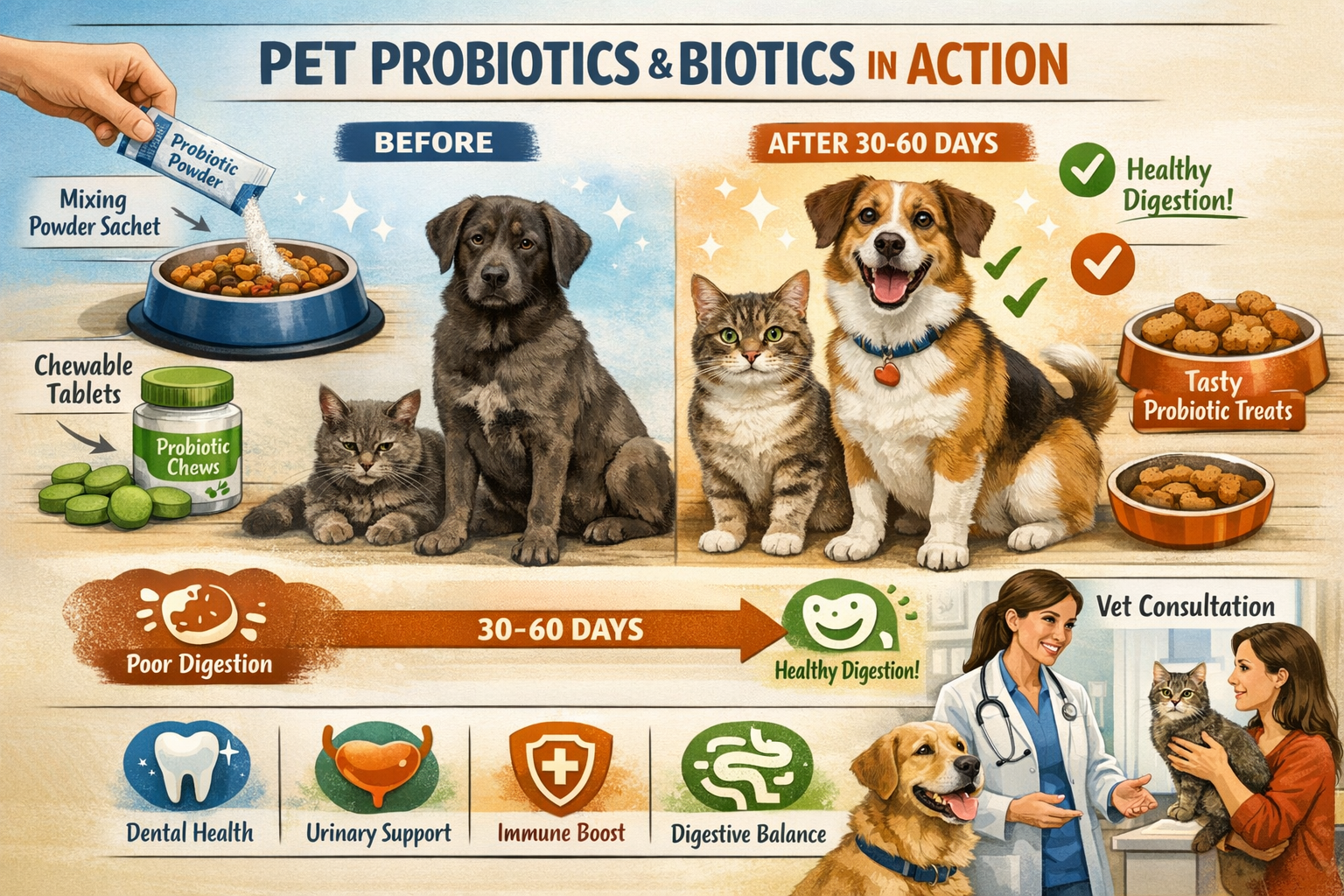
How long does it take to see results?
Most pets show improvement within 2-4 weeks of consistent use. Acute issues may improve faster; chronic conditions may take 6-8 weeks.
Can probiotics cause side effects?
Mild digestive changes (slightly looser stool, increased gas) may occur in the first few days as the gut adjusts. These typically resolve quickly. Serious side effects are rare.
Do probiotics need to be refrigerated?
It depends on the formula. Shelf-stable probiotics use special technology to maintain potency at room temperature. Always follow product-specific storage instructions.
Can I give my pet human probiotics?
While not harmful, pet-specific formulas contain strains researched for animal gut health and are more effective. Human probiotics may not survive the different pH levels in pet digestive systems.
Are probiotics safe for puppies and kittens?
Yes, but use formulas specifically designed for young animals with appropriate CFU counts. Consult your vet for specific recommendations.
How do I know if my pet needs probiotics?
Signs include irregular stool quality, frequent digestive upset, recent antibiotic use, food sensitivities, low energy, or frequent infections. When in doubt, ask your veterinarian.
Can probiotics replace medication?
No. Probiotics support health but don’t replace necessary medications. They work best as complementary therapy alongside proper veterinary care.
Taking Action: Smart Recommendations for Pet Owners
Ready to join the Gut Health Revolution: Probiotics and Biotics for Better Pet Digestion in 2026? Here are actionable steps to get started.
For Healthy Pets (Prevention)
- Choose high-quality food with natural prebiotic ingredients
- Consider a low-dose daily probiotic (1-2 billion CFUs)
- Maintain consistent feeding schedules
- Monitor stool quality as a health indicator
- Schedule annual vet checkups including digestive health discussion
For Pets with Digestive Issues
- Consult your veterinarian to rule out serious conditions
- Start a therapeutic-dose probiotic (5-10 billion CFUs for dogs)
- Keep a symptom journal tracking stool quality, energy, and appetite
- Eliminate potential food triggers one at a time
- Give supplements consistently for at least 4-6 weeks
- Reassess with your vet if no improvement after 6 weeks
For Senior Pets
- Add probiotics to daily routine as preventive care
- Choose senior-specific formulas with additional digestive enzymes
- Monitor for age-related digestive changes
- Adjust diet as needed for changing nutritional needs
- Increase veterinary checkup frequency to twice yearly
For Cats (Special Considerations)
- Select palatable formats (gels, flavor-enhanced powders)
- Start with lower CFU counts (500 million to 2 billion)
- Mix thoroughly with wet food for better acceptance
- Consider dental and urinary formulas for comprehensive support
- Be patient with administration as cats can be particular
For breed-specific dietary needs, check our breed-specific diet guides to complement probiotic supplementation.
Conclusion
The Gut Health Revolution: Probiotics and Biotics for Better Pet Digestion in 2026 represents a fundamental shift in pet wellness—one backed by explosive market growth, rigorous scientific research, and millions of pet owners seeing real results. With the pet probiotics market projected to reach USD 1.65 billion by 2030[2] and 32% of pet owners already purchasing supplements[1], this isn’t a passing trend but a permanent evolution in how we care for our animals.
Probiotics, prebiotics, digestive enzymes, and synbiotic blends offer proven benefits for digestive balance, immune strength, and overall longevity. Whether your pet struggles with sensitive digestion, is recovering from illness, or simply deserves the best preventive care, these supplements provide science-backed support that works.
The key is choosing quality products with researched strains, appropriate CFU counts, and proper storage—then using them consistently as part of a comprehensive wellness plan that includes quality nutrition, regular veterinary care, and attentive monitoring.
Your Next Steps:
- Assess your pet’s current digestive health and needs
- Consult your veterinarian about appropriate probiotic options
- Select a quality product matching your pet’s specific requirements
- Implement consistently and track results
- Adjust as needed based on your pet’s response
The gut health revolution is here, and your pet deserves to benefit from it. Start today, and give your dog or cat the foundation for a longer, healthier, more vibrant life.
For more guidance on optimal pet nutrition and wellness, visit our complete guide to pet nutrition and explore our canine nutrition resources.
References
[1] Pet Biotics Market Growth Drivers Trends Forecast Industry Insights 2025 2030 – https://www.barchart.com/story/news/36954033/pet-biotics-market-growth-drivers-trends-forecast-industry-insights-2025-2030
[2] Pet Probiotics Supplements Market – https://www.mordorintelligence.com/industry-reports/pet-probiotics-supplements-market
[3] Pet Biotics Market – https://www.marketsandmarkets.com/blog/FB/pet-biotics-market
[6] 4377980 Pet Probiotics Supplements Market – https://www.htfmarketinsights.com/report/4377980-pet-probiotics-supplements-market
