
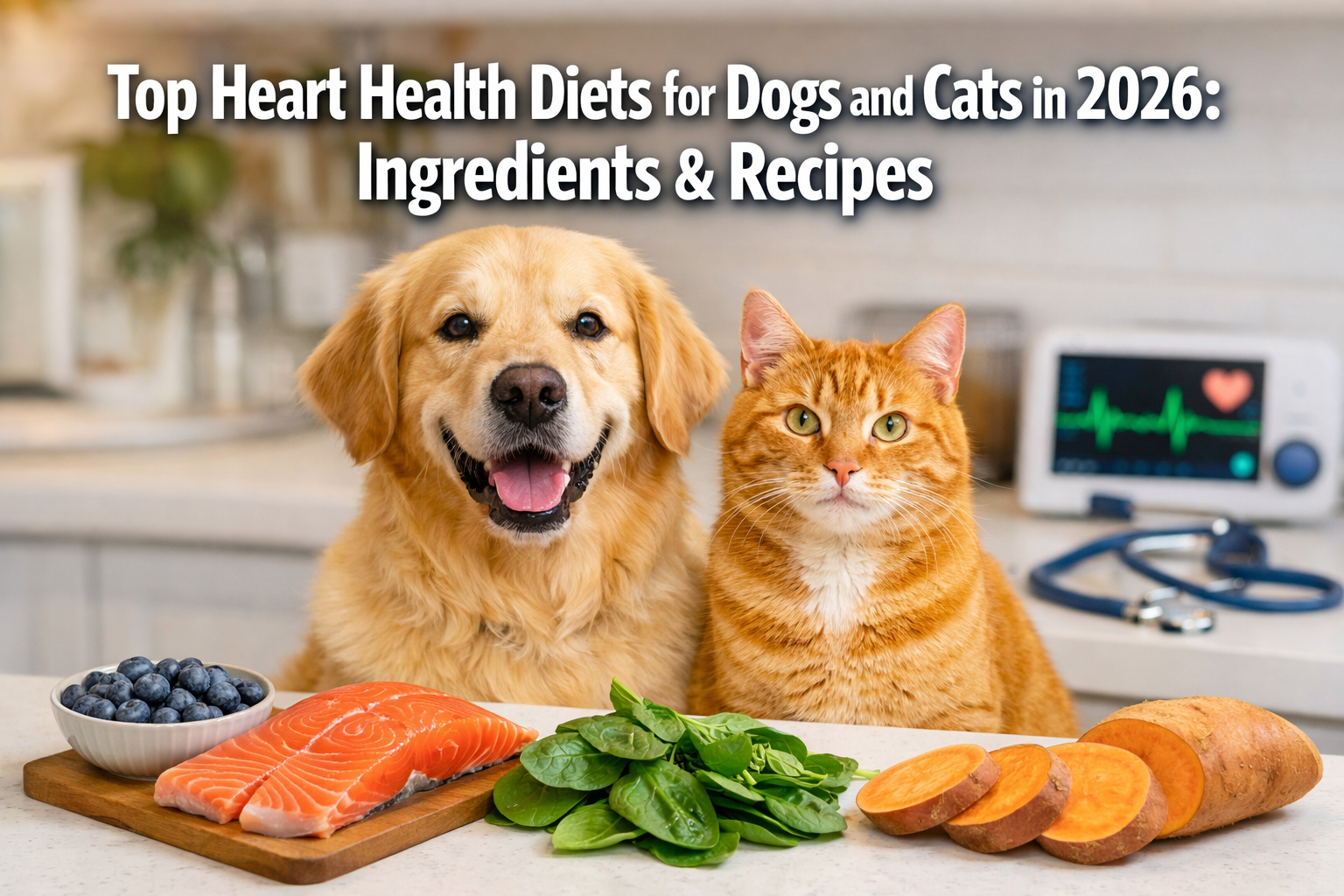
Heart disease in pets isn’t just a senior pet problem anymore. In 2026, veterinarians are seeing cardiac issues in younger dogs and cats, especially in certain breeds. The good news? The right diet can support heart health before problems start. Top Heart Health Diets for Dogs and Cats in 2026: Ingredients and Recipes focus on proactive nutrition with functional ingredients like omega-3 fatty acids, antioxidants, and controlled sodium levels that support cardiovascular function throughout your pet’s life.
This guide breaks down exactly what makes a heart-healthy pet diet, which ingredients matter most, and provides vet-approved recipes you can make at home. Whether your pet has been diagnosed with a heart condition or you want to prevent future problems, understanding cardiac nutrition is one of the smartest steps you can take.
Key Takeaways
- Omega-3 fatty acids from fish sources reduce inflammation and support heart muscle function in both dogs and cats
- Taurine is critical for cats (and certain dog breeds) to prevent dilated cardiomyopathy, a serious heart condition
- Controlled sodium levels help manage blood pressure and reduce fluid retention in pets with cardiac issues
- High-quality protein maintains muscle mass while supporting heart health without overworking the cardiovascular system
- Antioxidants like vitamins E and C protect heart cells from oxidative damage and support overall cardiac function
Understanding Heart Health Nutrition for Dogs and Cats
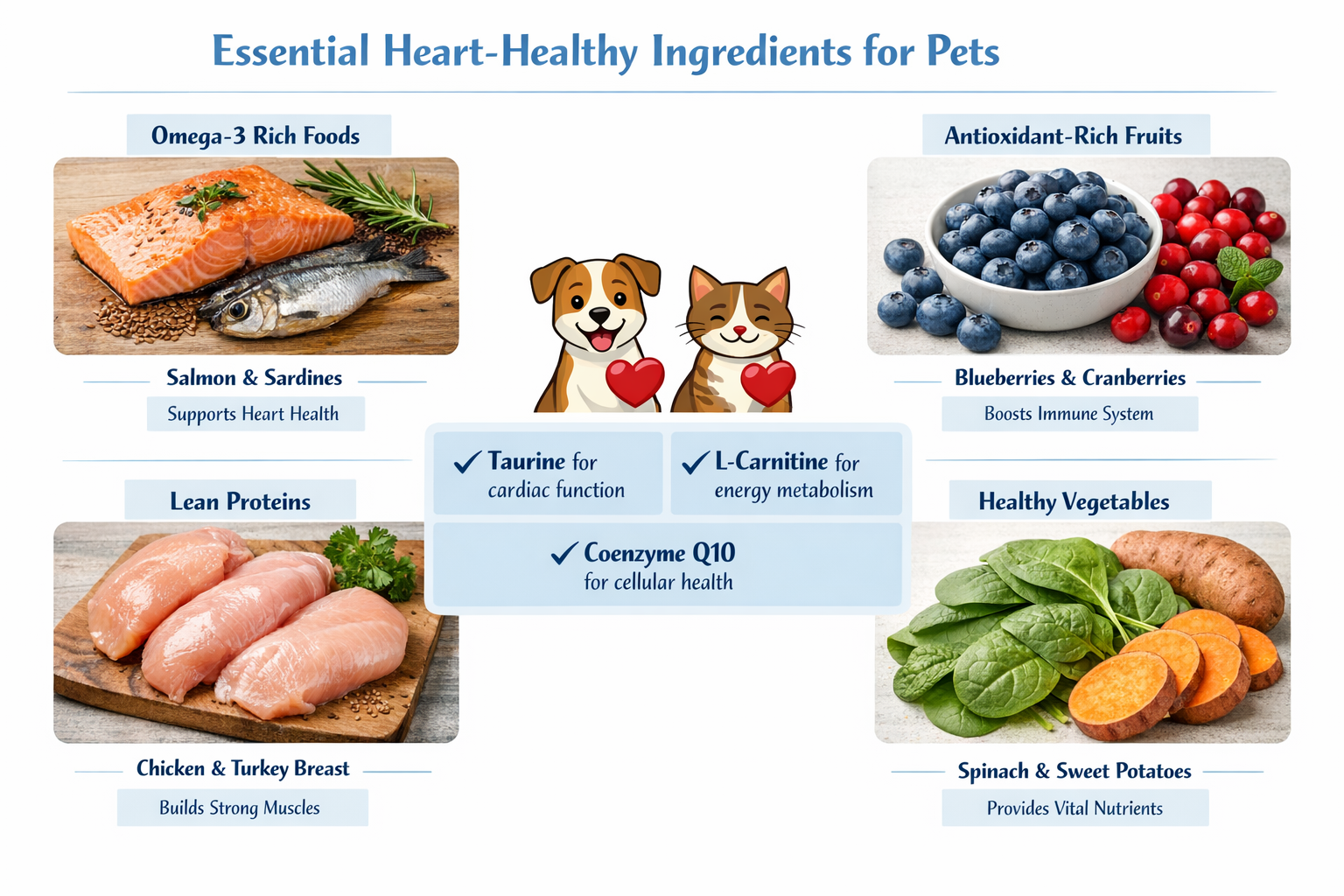
Heart health diets work differently for dogs and cats because of their unique nutritional needs. Dogs are omnivores with more flexible dietary requirements, while cats are obligate carnivores that need specific nutrients only found in animal tissues[3].
Why Cardiac Nutrition Matters in 2026
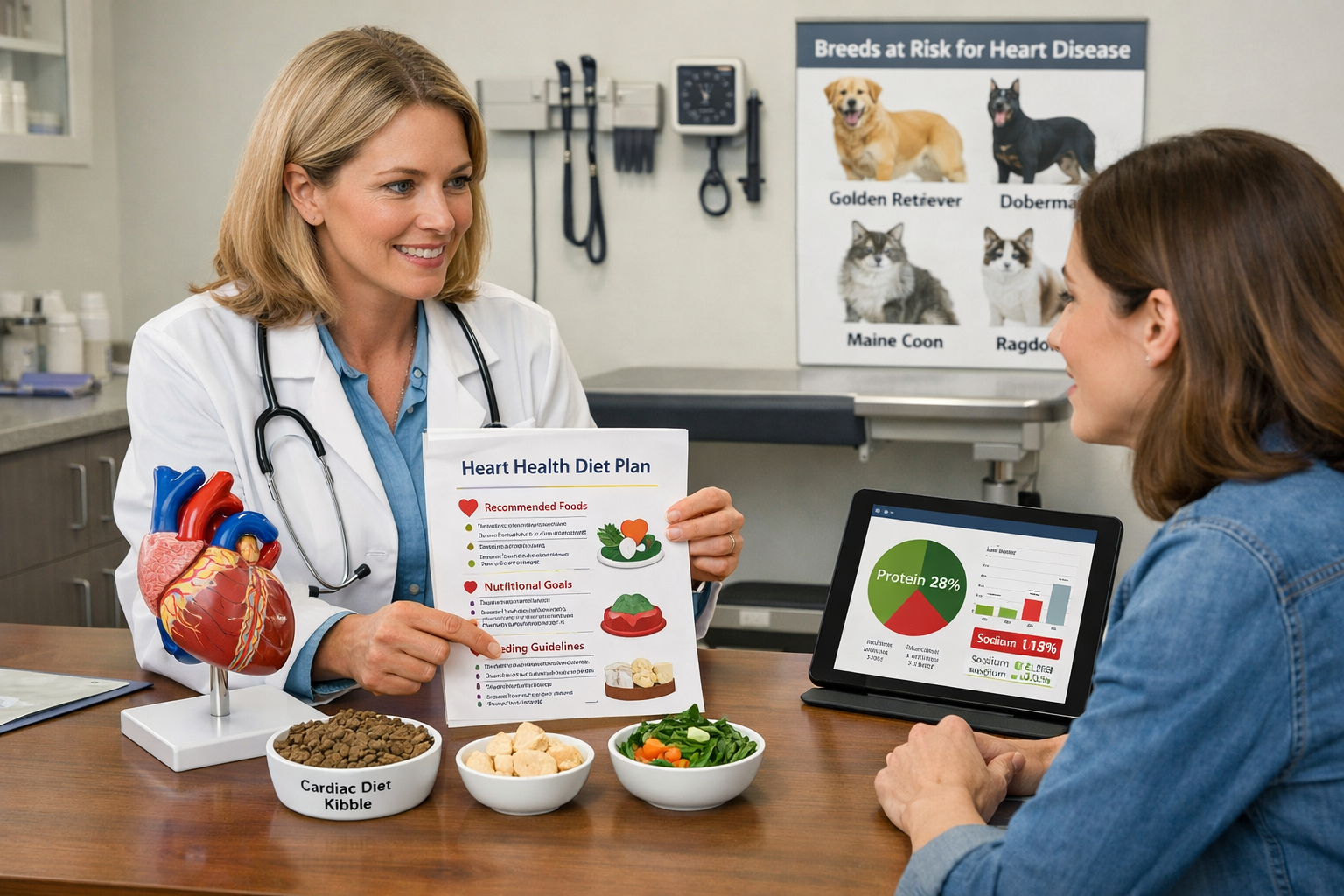
The pet food industry has shifted toward proactive health management rather than reactive treatment. Research shows that certain breeds face higher cardiac risks—Golden Retrievers, Doberman Pinschers, and Cavalier King Charles Spaniels for dogs; Maine Coons, Ragdolls, and Persian cats for felines.
According to WSAVA Global Guidelines, nutrition plans should be individually tailored based on breed, age, activity level, and health status[5]. This means a one-size-fits-all approach doesn’t work for heart health.
The Science Behind Heart-Healthy Ingredients
Omega-3 fatty acids (EPA and DHA) from fish oil reduce inflammation throughout the body, including in blood vessels and heart tissue. Studies show these fatty acids can help manage arrhythmias and support overall cardiac output.
Taurine is an amino acid that cats cannot produce in sufficient quantities on their own. Deficiency leads to dilated cardiomyopathy (DCM), where the heart muscle weakens and cannot pump blood effectively. Some large-breed dogs also benefit from taurine supplementation[3].
L-carnitine helps transport fatty acids into cells for energy production, supporting the heart’s constant work. Coenzyme Q10 acts as an antioxidant and supports cellular energy in heart muscle cells.
Controlled sodium prevents fluid retention and reduces blood pressure strain on the cardiovascular system. However, sodium shouldn’t be eliminated entirely—pets need some for normal function.
Essential Ingredients in Top Heart Health Diets for Dogs and Cats in 2026
Building a cardiac-supportive diet starts with choosing the right ingredients. Here’s what to look for and why each component matters.
Protein Sources That Support Heart Function
For Dogs:
- Lean chicken breast – High-quality protein without excess fat
- Turkey – Rich in taurine and L-carnitine
- Salmon – Provides protein plus omega-3 fatty acids
- Eggs – Complete amino acid profile with moderate fat
For Cats:
- Chicken thighs – Higher taurine content than breast meat
- Sardines – Packed with taurine, omega-3s, and coenzyme Q10
- Beef heart – Ironically, one of the best sources of cardiac-supporting nutrients
- Rabbit – Lean, highly digestible protein for sensitive cats
Quality matters more than quantity. The AAHA Nutritional Assessment Guidelines emphasize that protein should be highly digestible and bioavailable[4]. For more protein-focused recipes, check out our raw dog food diet recipes and homemade venison recipe.
Omega-3 Rich Additions
| Ingredient | Omega-3 Content | Best For | Serving Suggestion |
|---|---|---|---|
| Salmon oil | Very High | Dogs & Cats | 1/4 tsp per 10 lbs body weight |
| Sardines (canned in water) | High | Dogs & Cats | 1 small fish per 20 lbs |
| Mackerel | High | Dogs & Cats | Cooked, deboned portion |
| Chia seeds | Moderate (ALA)* | Dogs only | Ground, 1/4 tsp per meal |
| Flaxseed oil | Moderate (ALA)* | Dogs only | 1/4 tsp per 10 lbs |
*Note: ALA (alpha-linolenic acid) must be converted to EPA/DHA. Cats cannot efficiently make this conversion, so they need direct EPA/DHA sources from fish.
Antioxidant-Rich Vegetables and Fruits
Safe for Dogs:
- Blueberries – High in anthocyanins that protect blood vessels
- Spinach – Contains magnesium and potassium (use in moderation)
- Sweet potatoes – Beta-carotene converts to vitamin A
- Green beans – Low-calorie fiber source
- Carrots – Vitamin A and fiber
Safe for Cats (in small amounts):
- Pumpkin – Fiber and beta-carotene
- Cooked spinach – Minimal amounts only
- Blueberries – Occasional treat
Cats need primarily meat-based diets, so vegetables should never exceed 5% of their total food intake. For dogs, vegetables can comprise 10-25% depending on the recipe.
Supplements That Make a Difference
🔹 Taurine – 500-1000mg daily for dogs at risk; 250-500mg for cats (most quality cat foods already include this)
🔹 L-carnitine – 50-100mg per kg body weight for dogs with DCM
🔹 Coenzyme Q10 – 30-100mg daily depending on pet size
🔹 Vitamin E – Natural antioxidant, 100-400 IU daily for dogs; 30-50 IU for cats
🔹 Magnesium – Supports heart rhythm regulation (usually adequate in balanced diets)
Always consult your veterinarian before adding supplements. The FEDIAF Nutritional Guidelines provide detailed micronutrient requirements for complete and balanced pet foods[1][2].
Vet-Approved Heart Health Recipes for Dogs
These recipes follow nutritional principles outlined in global veterinary guidelines[5] and can be customized based on your dog’s specific needs.
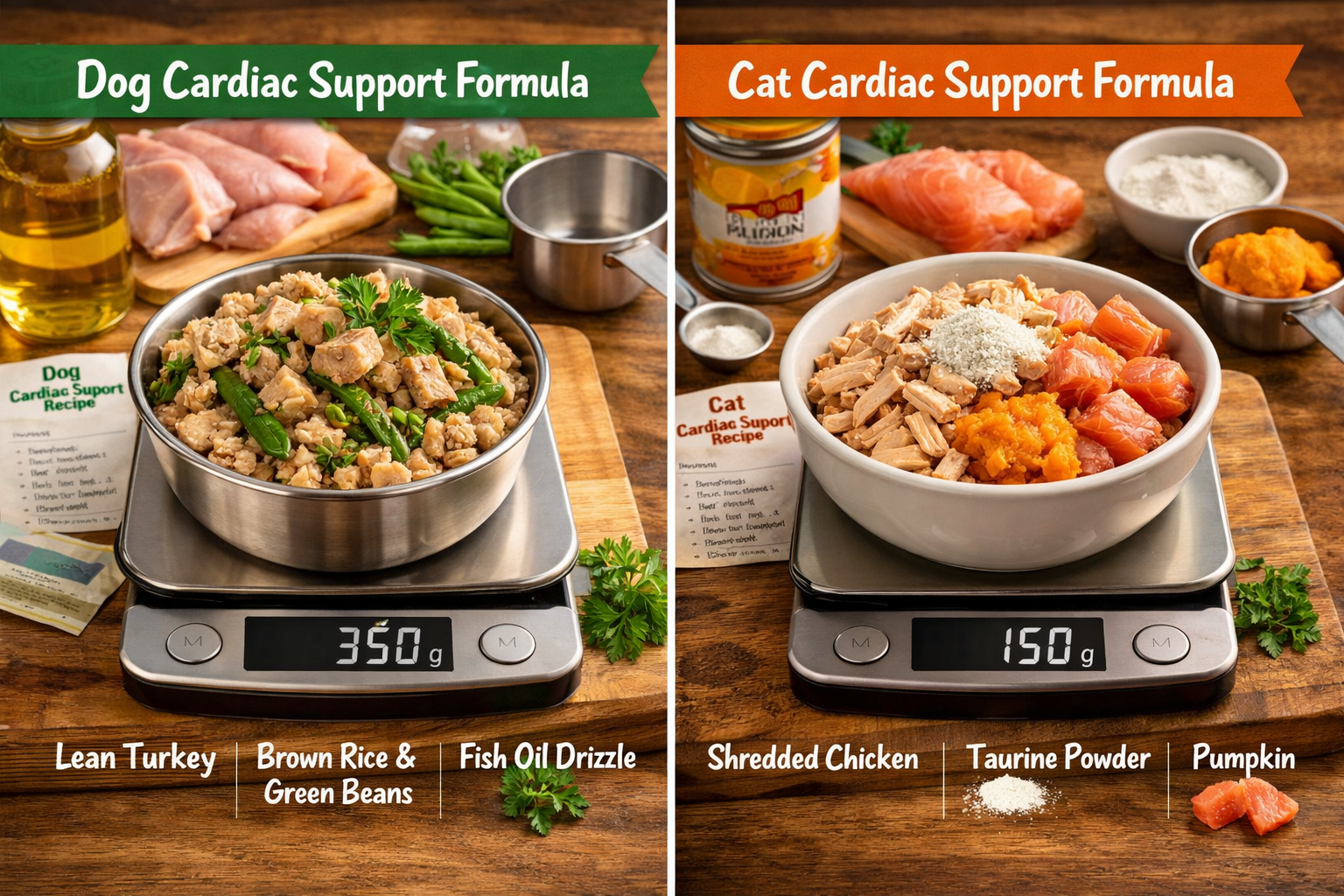
Recipe 1: Cardiac Support Turkey & Salmon Bowl (For Dogs)
Ingredients:
- 1 lb ground turkey (93% lean)
- 4 oz cooked salmon (deboned)
- 1 cup cooked brown rice
- 1/2 cup cooked green beans (chopped)
- 1/2 cup cooked sweet potato (mashed)
- 1/4 cup blueberries
- 1 tablespoon salmon oil
- 1/2 teaspoon ground eggshell (calcium)
- 500mg taurine supplement
- 1 multivitamin formulated for homemade dog food
Instructions:
- Cook turkey thoroughly in a pan without added salt or oil
- Bake or steam salmon until fully cooked; remove all bones
- Cook brown rice according to package directions
- Steam green beans and sweet potato until soft
- Mix all ingredients together in a large bowl
- Add salmon oil, taurine, and vitamin supplements
- Divide into meal-sized portions and refrigerate (use within 3-4 days) or freeze
Yields: Approximately 4-5 meals for a 50 lb dog
Nutritional Benefits: This recipe provides approximately 25-30% protein, moderate fat from salmon and oil, controlled carbohydrates, and high omega-3 content. The taurine and L-carnitine (naturally present in turkey) support cardiac muscle function.
Recipe 2: Low-Sodium Chicken & Vegetable Stew (For Dogs)
Ingredients:
- 1.5 lbs boneless, skinless chicken breast
- 1/2 cup cooked quinoa
- 1 cup mixed vegetables (carrots, spinach, green beans)
- 1/4 cup pumpkin puree
- 2 tablespoons ground flaxseed
- 1 tablespoon olive oil
- 1 teaspoon dried parsley
- 100mg Coenzyme Q10
- Calcium and multivitamin supplement
Instructions:
- Boil chicken in unsalted water until fully cooked
- Shred chicken into bite-sized pieces
- Cook quinoa according to package directions
- Steam vegetables until tender
- Combine all ingredients with cooking liquid to create stew consistency
- Add supplements and mix thoroughly
- Store in refrigerator or freeze in portions
Yields: 5-6 meals for a 40 lb dog
Nutritional Benefits: Lower fat content suitable for dogs needing weight management alongside cardiac support. Quinoa provides complete amino acids and magnesium.
For more meal ideas, explore our best dog recipes collection.
Vet-Approved Heart Health Recipes for Cats
Cats require higher protein percentages and specific nutrients that dogs can produce themselves. These recipes address feline cardiac needs specifically.
Recipe 3: Taurine-Rich Chicken & Sardine Mix (For Cats)
Ingredients:
- 1 lb chicken thighs (with skin, deboned)
- 4 oz sardines in water (no salt added)
- 1 tablespoon chicken liver (cooked)
- 2 tablespoons cooked pumpkin
- 1 teaspoon salmon oil
- 500mg taurine supplement
- 1/4 teaspoon ground eggshell (calcium)
- Feline multivitamin/mineral supplement
Instructions:
- Cook chicken thighs thoroughly (baking works well)
- Remove all bones carefully—cooked bones splinter
- Chop chicken into small, cat-appropriate pieces
- Mash sardines with a fork
- Cook liver until no pink remains; chop finely
- Mix all ingredients together
- Add supplements and mix well
- Portion into daily servings (refrigerate up to 3 days or freeze)
Yields: 5-6 meals for a 10 lb cat
Nutritional Benefits: High protein (40%+), moderate fat, rich in taurine from multiple sources. Sardines provide omega-3s and coenzyme Q10. Chicken liver adds vitamin A and B vitamins.
Recipe 4: Beef Heart & Salmon Cardiac Formula (For Cats)
Ingredients:
- 8 oz beef heart (trimmed)
- 4 oz salmon fillet
- 2 oz chicken liver
- 1 egg yolk
- 1 tablespoon bone meal (or ground eggshell)
- 1 teaspoon fish oil
- 250mg taurine supplement
- Feline vitamin/mineral supplement
Instructions:
- Trim excess fat from beef heart
- Cook beef heart, salmon, and liver thoroughly
- Chop all meats into small pieces or pulse in food processor
- Mix in raw egg yolk (or lightly scrambled if preferred)
- Add bone meal, fish oil, and supplements
- Mix until well combined
- Portion and store appropriately
Yields: 4-5 meals for a 10 lb cat
Nutritional Benefits: Beef heart is naturally rich in taurine, coenzyme Q10, and L-carnitine—making it an ideal cardiac support protein. Combined with salmon’s omega-3s, this creates a powerhouse heart health meal.
⚠️ Important Note: Homemade cat diets require careful supplementation to be complete and balanced. Work with a veterinary nutritionist to ensure your recipe meets all AAHA and WSAVA guidelines[4][5].
Breed-Specific Considerations for Heart Health Diets
Certain breeds face higher cardiac risks and may benefit from earlier dietary intervention.
High-Risk Dog Breeds
Doberman Pinschers – Prone to dilated cardiomyopathy (DCM); benefit from taurine and L-carnitine supplementation even before diagnosis
Cavalier King Charles Spaniels – Often develop mitral valve disease; lower sodium diets help manage progression
Golden Retrievers – Recent concerns about grain-free diets and DCM; ensure adequate taurine levels
Boxers – Risk of arrhythmogenic right ventricular cardiomyopathy; omega-3s and antioxidants support heart rhythm
For breed-specific nutritional guidance, visit our breed-specific diets section.
High-Risk Cat Breeds
Maine Coons – Hypertrophic cardiomyopathy (HCM) is common; high-protein, taurine-rich diets essential
Ragdolls – Also prone to HCM; omega-3 supplementation may help
Persian Cats – Heart disease risk increases with age; proactive nutrition matters
British Shorthairs – Moderate HCM risk; maintain healthy weight to reduce cardiac strain
What to Avoid in Heart Health Diets
Knowing what to exclude is just as important as knowing what to include.
Ingredients That Harm Heart Health
❌ Excessive sodium – Avoid processed meats, canned foods with added salt, and human food scraps
❌ High-fat processed foods – Can lead to obesity, which strains the heart
❌ Artificial preservatives – BHA, BHT, and ethoxyquin may have negative health effects
❌ Excessive carbohydrates – Especially for cats; can lead to obesity and diabetes
❌ Onions and garlic – Toxic to both dogs and cats; can cause anemia
For a comprehensive list of foods to avoid, check our A-Z guide to dog-safe foods.
The Grain-Free Diet Controversy
In recent years, the FDA investigated a potential link between grain-free diets and DCM in dogs. The concern centered on diets high in peas, lentils, and potatoes as primary ingredients, possibly interfering with taurine absorption or production.
Current recommendations:
- If feeding grain-free, ensure adequate taurine supplementation
- Choose diets with animal protein as the first ingredient
- Consider whole grains like brown rice and oats as healthy carbohydrate sources
- Work with your veterinarian to monitor heart health
The investigation is ongoing, but the key takeaway is that diet formulation matters more than the presence or absence of grains[8].
Transitioning to a Heart Health Diet
Sudden diet changes can upset your pet’s digestive system. Follow this gradual transition schedule.
7-Day Transition Plan
Days 1-2: 75% old food + 25% new heart health diet Days 3-4: 50% old food + 50% new diet Days 5-6: 25% old food + 75% new diet Day 7+: 100% new heart health diet
Watch for:
- Changes in stool consistency
- Vomiting or decreased appetite
- Energy level changes
- Allergic reactions (itching, skin issues)
If digestive upset occurs, slow the transition to 10-14 days. Some pets with sensitive stomachs need even longer adjustment periods. Our hypoallergenic diet guide offers additional tips for sensitive pets.
Working With Your Veterinarian
Home-prepared diets require professional guidance. Even well-intentioned recipes can lack essential nutrients if not properly formulated.
Questions to Ask Your Vet
✅ Does my pet have any cardiac risk factors based on breed, age, or health history?
✅ Should we run baseline cardiac tests (echocardiogram, blood pressure, ECG)?
✅ What are the ideal calorie and protein levels for my pet’s current condition?
✅ Which supplements are necessary for a complete homemade diet?
✅ How often should we monitor heart health with this dietary approach?
✅ Are there any medications that interact with dietary supplements?
The WSAVA Global Nutrition Guidelines recommend that veterinarians assess nutrition at every wellness visit[5]. This ensures dietary plans evolve with your pet’s changing needs.
When to Consider Prescription Cardiac Diets
Commercial prescription diets are formulated specifically for pets with diagnosed heart disease. They offer:
- Precise nutrient control – Sodium, protein, and phosphorus levels carefully managed
- Consistent formulation – Every batch meets the same nutritional standards
- Convenience – No measuring or supplement calculations needed
- Research-backed – Clinical trials support their efficacy
Prescription diets work well for many pets, but some owners prefer homemade options for ingredient quality control or when pets refuse commercial foods. Both approaches can work with proper veterinary oversight.
Monitoring Your Pet’s Heart Health Progress
Diet changes should produce measurable improvements over time.
Signs of Improvement
💚 Increased energy levels – Better cardiac output means more stamina
💚 Reduced coughing – Less fluid accumulation in lungs
💚 Easier breathing – Improved oxygenation
💚 Stable weight – Neither gaining nor losing excessively
💚 Better appetite – Feeling better overall
💚 Improved coat quality – Better nutrient absorption and circulation
Warning Signs to Watch
🚨 Increased coughing or difficulty breathing
🚨 Weakness or collapse
🚨 Reduced appetite lasting more than 24 hours
🚨 Abdominal swelling (fluid retention)
🚨 Blue or pale gums
🚨 Rapid or irregular heartbeat
These symptoms require immediate veterinary attention. Heart disease can progress quickly, and early intervention saves lives.
Practical Tips for Preparing Heart-Healthy Pet Food
Making homemade pet food doesn’t have to be complicated. Here’s how to streamline the process.
Batch Cooking and Storage
Prepare weekly batches – Cook once, portion into daily servings, and freeze
Use ice cube trays – Freeze supplements or oils separately for easy adding
Label everything – Date prepared, recipe name, and portion size
Rotate proteins – Variety ensures broader nutrient intake
Invest in a food scale – Accuracy matters for consistent nutrition
Food Safety Essentials
- Cook all meats thoroughly to kill bacteria
- Wash hands and surfaces before and after food prep
- Store prepared food at 40°F or below
- Discard refrigerated food after 3-4 days
- Thaw frozen portions in the refrigerator, not on the counter
- Never refreeze thawed food
Proper food handling prevents foodborne illness in pets and humans. The same safety rules that apply to human food preparation apply to pet food.
Cost Considerations and Budget-Friendly Options
Heart-healthy homemade diets can fit various budgets with smart planning.
Money-Saving Strategies
💰 Buy proteins in bulk – Family packs or wholesale clubs offer better prices
💰 Use seasonal vegetables – Fresh produce costs less when in season
💰 Choose budget-friendly fish – Canned sardines and mackerel provide omega-3s affordably
💰 Grow pet-safe vegetables – Spinach, green beans, and carrots are easy to grow
💰 Compare supplement prices – Generic versions often match name-brand quality
💰 Cook human and pet meals together – Use the same base ingredients, season separately
Cost Comparison: Homemade vs. Commercial
Homemade cardiac diet: $2-4 per day for a 50 lb dog Premium commercial cardiac diet: $3-5 per day for a 50 lb dog Prescription cardiac diet: $4-7 per day for a 50 lb dog
Costs vary by region and ingredient choices. Homemade diets often cost less than prescription options while offering ingredient control.
Frequently Asked Questions
Can I feed the same heart health diet to both my dog and cat?
No. Dogs and cats have different nutritional requirements. Cats need significantly more protein, taurine, and specific vitamins that dogs can produce themselves. Always prepare species-appropriate meals.
How long before I see improvements from a heart health diet?
Most pets show subtle improvements within 2-4 weeks, but significant changes may take 2-3 months. Cardiac health is a long-term commitment, not a quick fix.
Can diet reverse heart disease in pets?
Diet cannot reverse structural heart damage, but it can slow progression, reduce symptoms, and improve quality of life. Early intervention with proper nutrition offers the best outcomes.
Do I need to give supplements if I’m feeding a balanced homemade diet?
Yes. Even carefully planned homemade diets often lack adequate calcium, vitamins, and minerals. Work with a veterinary nutritionist to determine which supplements your recipe needs[6].
Is it safe to feed raw heart health diets?
Raw diets carry bacterial contamination risks. If you choose raw feeding, source ingredients carefully and follow strict food safety protocols. For more information, see our raw food section.
Conclusion
Top Heart Health Diets for Dogs and Cats in 2026: Ingredients and Recipes represent a proactive approach to pet wellness. By focusing on functional ingredients like omega-3 fatty acids, taurine, antioxidants, and high-quality proteins, you can support your pet’s cardiovascular system throughout their life.
The recipes and ingredient guidelines in this article provide a solid foundation, but remember that every pet is unique. Breed, age, activity level, and existing health conditions all influence nutritional needs. Working with your veterinarian ensures your homemade diet meets your pet’s specific requirements while following evidence-based nutritional guidelines[5][8].
Next Steps to Take Today
- Schedule a veterinary consultation to discuss your pet’s cardiac risk factors and baseline health
- Choose one recipe from this guide that matches your pet’s species and preferences
- Source quality ingredients from trusted suppliers
- Start the transition gradually using the 7-day plan outlined above
- Monitor progress with regular vet check-ups and home observations
- Adjust as needed based on your pet’s response and changing health status
Heart health isn’t just about treating disease—it’s about preventing problems before they start. With the right nutrition, you’re giving your dog or cat the best chance at a long, healthy, active life.
For more nutritional guidance and recipes, explore our nutrition guides and main meals collection.
References
[1] Fediaf Releases Updated Guidelines For Cat And Dog Food – https://www.petfoodindustry.com/news-newsletters/pet-food-news/news/15754967/fediaf-releases-updated-guidelines-for-cat-and-dog-food
[2] Fediaf Nutritional Guidelines 2025 Online – https://europeanpetfood.org/wp-content/uploads/2025/09/FEDIAF-Nutritional-Guidelines_2025-ONLINE.pdf
[3] A Guide To Pet Nutrition And Diet In 2026 – https://thecurioustimes.com/a-guide-to-pet-nutrition-and-diet-in-2026/
[4] Helping Pets Live Healthier Thinner Lives Aaha Nutritional Assessment Guidelines – https://www.fda.gov/animal-veterinary/animal-health-literacy/helping-pets-live-healthier-thinner-lives-aaha-nutritional-assessment-guidelines
[5] Global Nutrition Guidelines – https://wsava.org/global-guidelines/global-nutrition-guidelines/
[6] Understanding Pet Nutrition Choosing The Right Diet For Your Dog Or Cat – https://telltailvet.com/understanding-pet-nutrition-choosing-the-right-diet-for-your-dog-or-cat/
[8] Evaluating Pet Food – https://hospital.cvm.ncsu.edu/services/small-animals/nutrition/evaluating-pet-food/
